
Key Points
-
If Nokia’s AI partnership with Nvidia starts driving real growth, the market may finally view it as an AI infrastructure stock instead of a legacy telecom name.
-
July’s earnings could mark a turning point.
-
If Nokia delivers on its AI strategy, today’s valuation may look much too low.
- 10 stocks we like better than Nokia ›
When I hear Nokia (NYSE: NOK), I think of the indestructible brick phone my parents owned. And I think about the 2021 meme-stock craze.
But over the past several years, Nokia has been rebuilding itself around three businesses: network infrastructure, optical networking, and enterprise technology. None of that is flashy. But something shifted this year that deserves more attention than it’s getting.
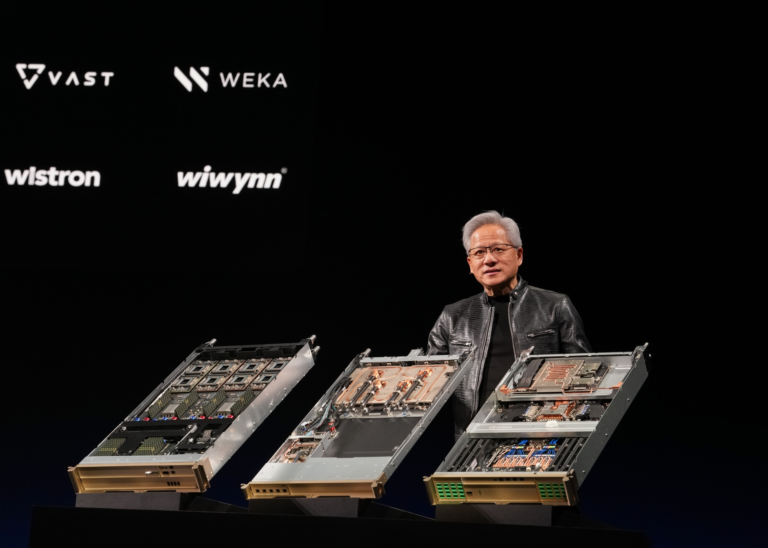
In May 2026, Nokia and Nvidia (NASDAQ: NVDA) announced a landmark strategic partnership in which Nvidia will invest $1 billion in Nokia — at $6.01 per share — to accelerate what the two companies are calling AI-RAN, a new category of radio access networks built natively for artificial intelligence (AI) workloads. Nvidia becomes a 2.9% shareholder in Nokia as part of the deal. T-Mobile (NASDAQ: TMUS) also signed on to run field trials of AI-RAN this year.
Think about what that structure implies. Nvidia doesn’t write $1 billion checks to legacy companies. It bets on picks-and-shovels plays in markets it believes are about to explode. Nokia is now one of those picks.
The optical angle to consider
While the AI-RAN deal grabbed headlines, Nokia’s optical networking business may be the more interesting story. The company is bringing a second indium phosphide semiconductor fabrication facility online in San Jose, California, later this year.
Indium phosphide is the substrate that powers high-speed optical transceivers — the components that physically move data inside AI data centers at the speeds those workloads demand. Nokia builds these in-house. Most of its competitors don’t.
That kind of vertical integration is a durable advantage in a supply-constrained market.
Why July 23 matters
Nokia is scheduled to report Q2 2026 results on July 23. That report will be the first one where investors can see how the Nvidia partnership is actually showing up in order books and whether the San Jose facility ramp is on schedule. If Nokia delivers on optical growth and provides forward guidance tied to the AI-RAN commercialization timeline, this stock could reprice quickly.
Nokia still carries execution risk from its 2024 acquisition of Infinera, and 6G timelines have a history of slipping. The AI-RAN market is early stage. These are legitimate concerns. But when Nvidia puts a billion dollars behind a thesis and the product pipeline is this deep, dismissing Nokia as a relic starts to look like the bigger mistake.
Nokia has spent years being treated like a punchline. I feel like it’s been treated like a meme stock for retail traders who remembered the brand and bet on nostalgia. That trade is over. What’s here now is a company with a $1 billion strategic backer, proprietary semiconductor manufacturing, and a seat at the table for the infrastructure build-out that every major AI company depends on.
Should you buy stock in Nokia right now?
Before you buy stock in Nokia, consider this:
The Motley Fool Stock Advisor analyst team just identified what they believe are the 10 best stocks for investors to buy now… and Nokia wasn’t one of them. The 10 stocks that made the cut could produce monster returns in the coming years.
Consider when Netflix made this list on December 17, 2004… if you invested $1,000 at the time of our recommendation, you’d have $418,761!* Or when Nvidia made this list on April 15, 2005… if you invested $1,000 at the time of our recommendation, you’d have $1,195,804!*
Now, it’s worth noting Stock Advisor’s total average return is 918% — a market-crushing outperformance compared to 208% for the S&P 500. Don’t miss the latest top 10 list, available with Stock Advisor, and join an investing community built by individual investors for individual investors.
Micah Zimmerman has no position in any of the stocks mentioned. The Motley Fool has positions in and recommends Nvidia. The Motley Fool recommends T-Mobile US. The Motley Fool has a disclosure policy.